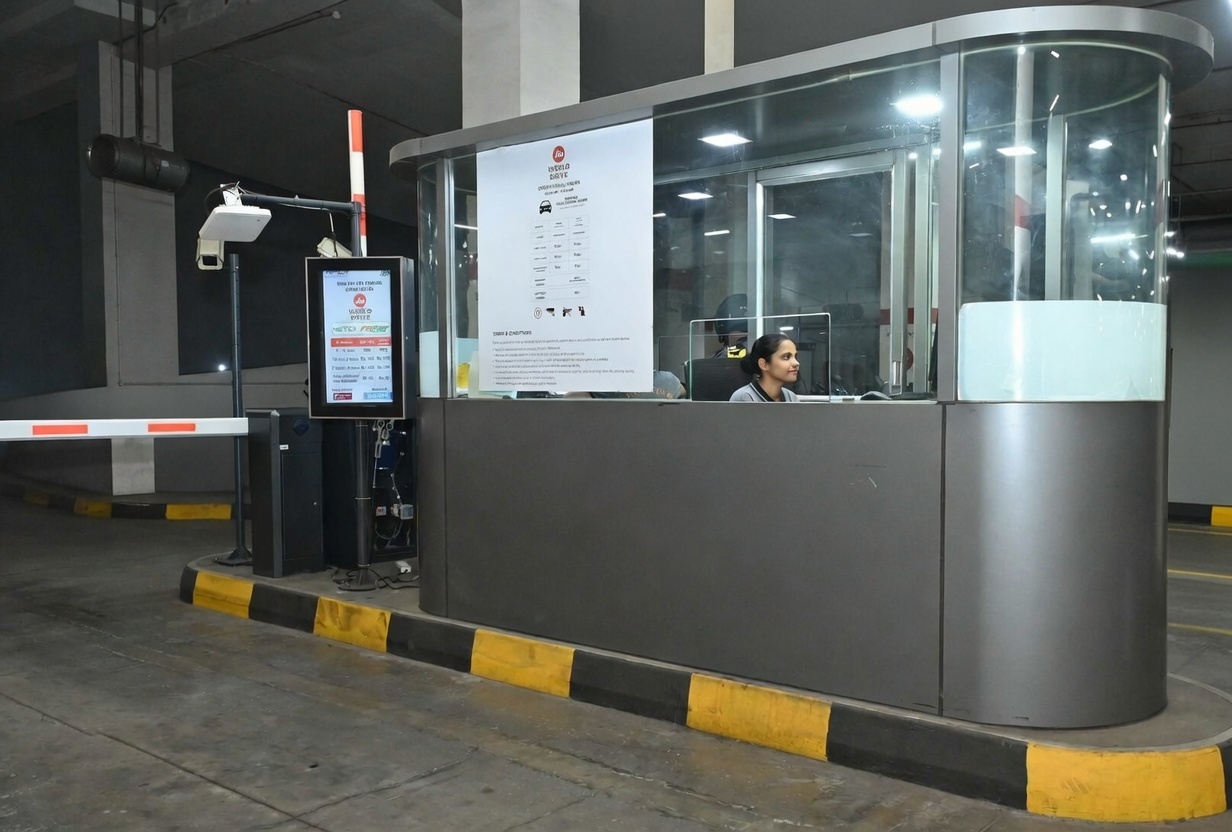
How Smart Parking Technology Is Transforming Urban Parking Into a Revenue-Driven Service
Introduction
Urbanization, mobility demand, and vehicle ownership are increasing worldwide — and Indian cities are no exception. As city centers become busier and space becomes scarce, traditional parking systems struggle to keep up. Drivers spend up to 30% of urban traffic time searching for parking, contributing to congestion, pollution, and lost economic opportunity.
Smart parking technology is not just optimizing spaces — it’s transforming parking into a revenue-driven service for operators, cities, and businesses. This transformation has implications for urban mobility, customer experience, traffic flow, and financial performance.
In this blog, we explore how smart parking technology works, why it matters, and how it’s shaping the future of urban parking.
What Is Smart Parking Technology?
Smart parking refers to the integration of IoT sensors, automation systems, data analytics, and digital platforms to manage parking facilities more efficiently than traditional manual systems.
Key components include:
- IoT sensor systems: Detect occupancy in real time
- Automated entry/exit equipment: Ticket dispensers, barrier gates
- Payment technologies: Mobile, FASTag, cashless AR/VR-enabled systems
- Parking Guidance Systems (PGS): Direct drivers to available spaces
- Central dashboards & analytics: Monitor usage, revenue, and flow
Together, these systems automate processes, reduce human error, optimize throughput, and generate actionable insights for operators. Instead of static, manual parking stalls, cities now have connected, data-driven ecosystems that improve both experience and economics.
1. Revenue Optimization Through Smart Technology
a. Dynamic Pricing Models
Traditional parking charges are fixed — but smart parking enables dynamic pricing based on demand, time of day, and location popularity.
- Peak hours carry higher rates
- Off-peak discounts encourage redistribution
- Premium reservations generate extra fees
This is similar to surge pricing used by ride-hailing platforms, but for parking.
Impact: Operators can dramatically increase revenue per space without expanding physical infrastructure.
b. Automated Payments & Digital Wallets
Smart parking integrates with:
- Mobile wallets
- QR payments
- FASTag
- Credit/debit cards
- App reservations
These systems reduce revenue leakage common in manual cash handling. Digital audits provide transparent, real-time reconciliation, reducing disputes and errors.
Result: Higher compliance, lower pilferage, and strengthened revenue tracking.
c. Violation Detection & Enforcement
Sensor-based and AI–powered systems automatically detect unauthorized parking, overstays, and policy violations.
Automatically:
- Record infraction time
- Capture vehicle image
- Issue fine/penalty
This minimal human enforcement reduces staff cost and increases revenue from penalties.
d. Data-Driven Forecasting
Parking technology collects demand data over time — enabling:
- Predictive pricing
- Capacity forecasting
- Traffic impact analysis
Operators use this to plan expansion, price adjustments, and service improvement, turning parking into a scalable recurring revenue model.
2. Cost Reduction & Operational Efficiency
a. Reduced Manual Labor Costs
Automation replaces repetitive tasks:
- Manual ticket issuing
- Cash handling
- Queue management
- Human enforcement
Less staffing means lower labor costs and fewer disputes.
b. Lower Infrastructure Wastage
Central dashboards monitor:
- Empty spot data
- Disabled / inaccessible spots
- Underutilized hours
Operators can reallocate spots, reduce congestion, and maximize space ROI.
c. Shorter Dwell Time = Lower Cost
Faster flow reduces fuel consumption, wear and tear to infrastructure, and time spent searching for parking — which statistically accounts for up to 30% of inner-city traffic.
3. Better Traffic Flow & Urban Mobility
a. Reduced Circling Time
Smart systems direct drivers using:
- Dynamic signs
- App-based guidance
- Parking availability maps
This reduces wandering vehicles, lowering pollution and improving city mobility.
b. Integrated Urban Transport Systems
Smart parking data can integrate with:
- Traffic signals
- Ride-hailing services
- Public transit feeds
Cities can now coordinate traffic management with predictive demand data.
4. Customer Experience Transformation
a. Seamless Booking & Navigation
Drivers can:
- Pre-book spots
- Get real-time availability
- Save routes/navigation to the space
This increases usage and customer retention.
b. Cashless, Contactless Experience
With mobile payment integration and digital e-tickets, customer flow becomes:
- Faster
- Safer
- Contactless
Perfect for retail zones, airports, and hospitals.
5. Case Example — Smart Parking at Retail & Transit Locations
In cities with high retail footfall (like big malls), efficient parking:
- Increases customer satisfaction
- Reduces lost sales due to parking frustration
- Improves average shopper dwell time
Transit hubs with smart systems reduce boarding delays caused by parking queues.
6. Challenges & Solutions With Smart Parking
Challenge 1: Integration with legacy infrastructure
Solution: Modular systems + phased rollout
Challenge 2: User adoption
Solution: Mobile app ease, early-bird incentives
Challenge 3: Data security
Solution: Secure gateways + GDPR-style compliance
Conclusion
Smart parking isn’t just a convenience — it’s a game-changer for cities and operators. By leveraging automation, data, and digital workflows, parking becomes:
- A revenue-driven service
- A lower-cost operation
- A customer-centric experience
- A mobility improvement tool
With further advances in AI, IoT, and connected infrastructure, smart parking will continue to evolve — turning parking from a static duty into a core revenue stream for urban ecosystems.