An Exclusive Interview with Arvind Mayar, Chief Executive Officer at Secure Parking, a global leader in professional parking operations and management
In this exclusive interview, Arvind Mayar, CEO of Secure Parking—a global leader in professional parking operations and management—shares insights on revolutionizing urban mobility. From smart tech innovations to sustainable solutions across cities worldwide, discover his vision for the future of parking.
How does architecture-integrated parking redefine the traditional concept of parking spaces in malls, hospitals, airports and commercial complexes?
Arvind Mayar: Architecture-integrated parking changes the way large developments handle traffic by planning the parking layout right from the Greenfield stage. We work with architects and developers to study peak traffic, entry and exit loads, circulation paths and how quickly vehicles can be taken off the road and into the facility.
This reduces queuing, avoids congestion outside the property and makes the entire movement smooth for users. With the right design and parking management systems, we maximise space, reduce Capex and operating costs and give customers a conflict-free experience. (Company to elaborate on deeper architectural integration)
What are the key design principles you emphasize to ensure parking facilities blend naturally with the surrounding architecture?
Arvind Mayar: Good design is the foundation of any efficient parking facility. We work closely with architects early in the project to analyse traffic movement, ramp design, number of lanes needed and overall circulation. Our design principles ensure cars move easily without conflicts, customers don’t struggle on ramps and the parking layout supports the building’s overall function. These design inputs help reduce Capex, improve operational efficiency and create a seamless flow that fits naturally with the property.
Can you share some examples where Secure Parking has successfully implemented architecture-integrated parking? What were the unique challenges and solutions?
Arvind Mayar: We work across major malls, airports, offices, hospitals and commercial complexes, where integrated planning is essential. At large malls like Phoenix or Lulu, we manage thousands of cars daily. The challenge was handling peak-hour traffic without creating long queues on access roads. With strong design inputs, proper lane planning, and advanced technology such as ANPR and digital payments, we ensured smooth entry, exit, and customer experience. Our work at airports like Ahmedabad also shows how design and technology together can achieve almost 100% digital operations.
How does integrating parking seamlessly into building designs impact user experience and overall facility functionality?
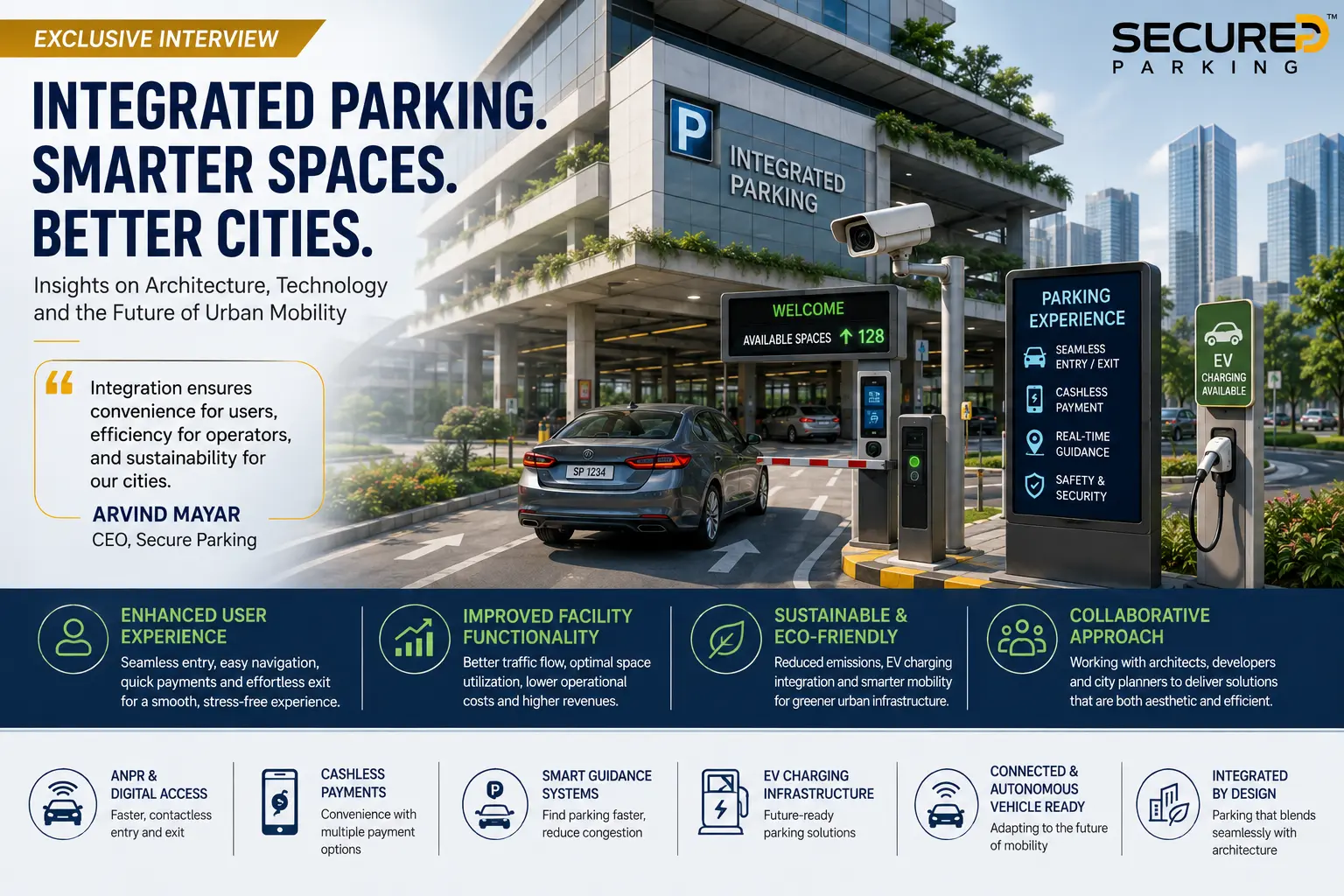
Arvind Mayar: When parking is integrated with the building design, it becomes far easier for customers to enter, park, pay and exit without confusion or delays. A good layout avoids bottlenecks, reduces the time spent looking for a bay and helps customers retrieve their cars quickly.
With digital payments, ANPR, guidance systems and well-trained staff on the ground, the experience becomes smooth and stress-free. For developers, this improves traffic flow, reduces operating costs and enhances revenue. Overall, integration ensures both convenience and efficiency.
In terms of sustainability, how does architecture-integrated parking contribute to greener, eco-friendlier urban infrastructure?
Arvind Mayar: In developed markets, there is a strong push towards automation, digital access and sustainable mobility. This includes green infrastructure, EV systems and multimodal integration – designed to reduce environmental impact. Architecture-integrated parking allows these elements to be built right into the structure.
It helps cut unnecessary vehicle circulation, improves traffic flow, and reduces emissions outside large developments. As cities move towards smarter mobility, integrated and technology-driven parking becomes a key part of eco-friendly urban planning.
How do you collaborate with architects, developers, and city planners to ensure parking solutions meet both aesthetic and operational goals?
Arvind Mayar: We collaborate from the planning stage with architects, urban planners, and municipalities. Our traffic engineers’ study peak demand, road conditions, circulation patterns and advise on U-turns, signals and access points to ease congestion. With municipalities, we have worked on both on-street off-street car parks, including automated systems, metro-adjacent facilities and large commercial developments.
We provide technology, design inputs, and on-ground operations to ensure customer convenience, higher revenue, and efficient use of space. We also advise smart city projects in Southeast Asia.
How do you address the challenge of evolving vehicle types, including electric and autonomous cars, within architecture-integrated parking frameworks?
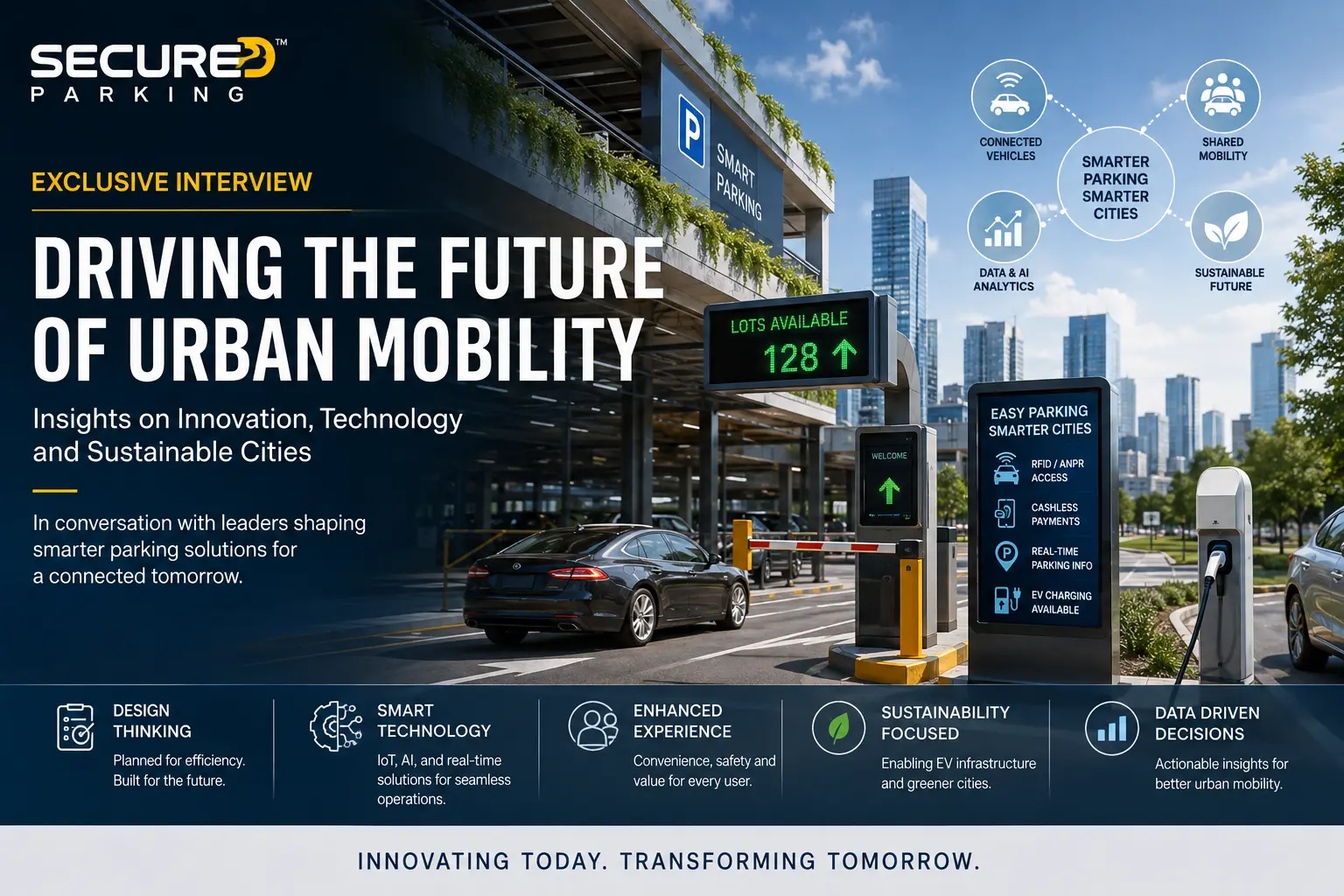
Arvind Mayar: Connected, shared and autonomous vehicles are redefining the future of parking. Connected cars will directly communicate with parking systems for booking and payments, so operators must integrate with vehicle platforms. Shared mobility reduces long-duration parking demand but increases need for quick-turnover spaces.
Autonomous vehicles will drop passengers at the destination and then park remotely, which will change how urban spaces are planned.
For EVs, parking facilities will increasingly serve as charging hubs – across malls, offices, transit stations, hospitals and residential buildings – supporting the growth of the EV ecosystem.
Arvind Mayar’s passion for innovative parking solutions shines through, positioning Secure Parking as a global pioneer. As cities evolve, his strategies promise smarter, greener mobility. This conversation inspires leaders to rethink urban spaces for tomorrow’s challenges.