An Exclusive Interview with Arvind Mayar, Chief Executive Officer of Secure Parking a global leader in car parking management
SugerMint Media Company , Ahmedabad
Arvind Mayar, Chief Executive Officer of Secure Parking, leads one of the world’s foremost car parking management companies. With a focus on innovation, technology, and customer convenience, he has helped shape smarter urban mobility solutions.
In this interview, he shares insights on industry trends, challenges, and Secure Parking’s vision for sustainable and connected cities of the future.
Urban congestion and parking shortages are major challenges worldwide. How does Secure Parking position itself in solving these problems?
Arvind Mayar: Secure Parking is in the space of planning and implementing traffic and parking solutions for large developments like malls, offices, commercial building, SEZs, airports, exhibition centres, hospitals and stadiums.
These developments are an urban magnet and can attract 10,000 or more vehicles per day during peak periods. This leads to congestion on the roads which can build up for kilo meters.
Our traffic engineers work with developers, architects and urban planners to study and propose mitigating strategies to ease this congestion. Recommendations can be in the nature of traffic signals, U-turns, underpasses, road widening etc.
It is important to get these vehicles off the road quickly and into the car park. Secure’s state of the art parking management system and car park layout and design capabilities, streamlines this aspect.
Subsequently, there is minimal queuing on the roads leading to an improvement in the quality of traffic flow.This combination of tailored design, technology, and operations helps reduce vehicle queuing and improved traffic flow which is crucial to easing urban congestion and alleviate the problem of parking shortage.
How do you collaborate with municipalities and urban planners to create more efficient parking systems?
Arvind Mayar: Municipalities and urban development authorities focus on both on street and off-street parking. We have worked with them and developers to finalise locations, design and build car parks.
Some of these are on street automated car parks and others are adjunct to metro stations, mall and commercial complexes. We provide the technology and systems to operate the car parks as well as provide customer convenience. We also operate car parks with boots on the ground to ensure professional and enhanced customer experience while simultaneously increasing revenues.
Secure Parking als0 works in SE Asia (Thailand & Cambodia) as advisors on intelligent parking solutions for smart cities on a PPP model.
With the rise of smart cities, how has Secure Parking integrated technology like IoT, AI, and data analytics into its parking solutions?
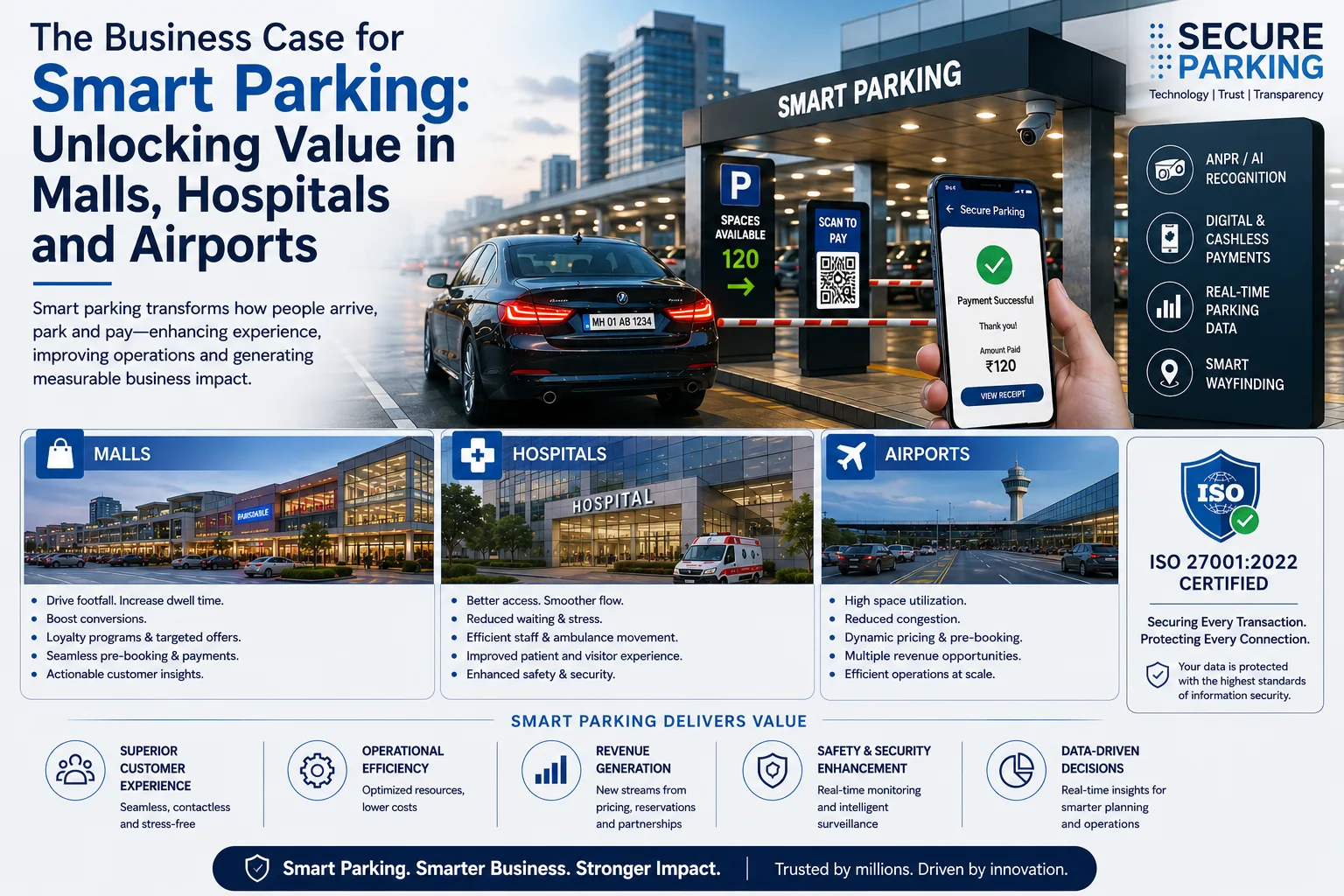
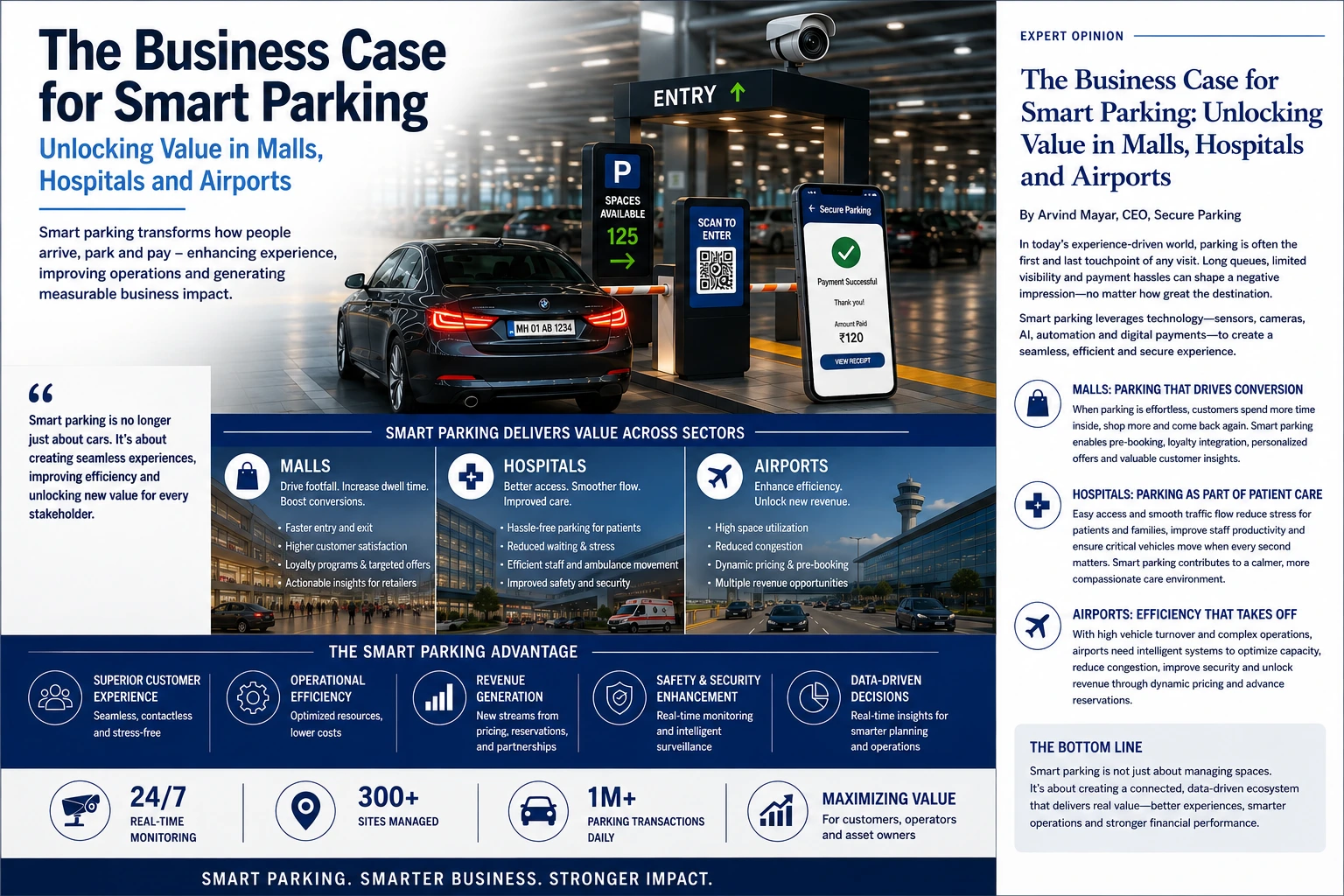
Arvind Mayar: Secure Parking India’s Dolphin Intelligent Parking Management System, deployed across Indian malls, hospitals, and airport facilities, is an indigenous smart solution which integrates technology like IoT, AI, and data analytics into its parking solutions.
It features real-time monitoring, queue management, loyalty programs, multiple payment modes, and ANPR integration.
Its self-diagnostic alerts, offline synchronization, and audit controls ensure smooth operations with minimal downtime, delivering valuable data insights for traffic flow optimization and decision-making.
Parking guidance technologies further support the Smart City initiatives through enhanced operational efficiency by managing traffic movement and optimizing space usage, enabled by Secure Parking’s Dolphin RFID.
What role do you see connected vehicles, shared mobility, and eventually autonomous vehicles playing in shaping the parking industry?
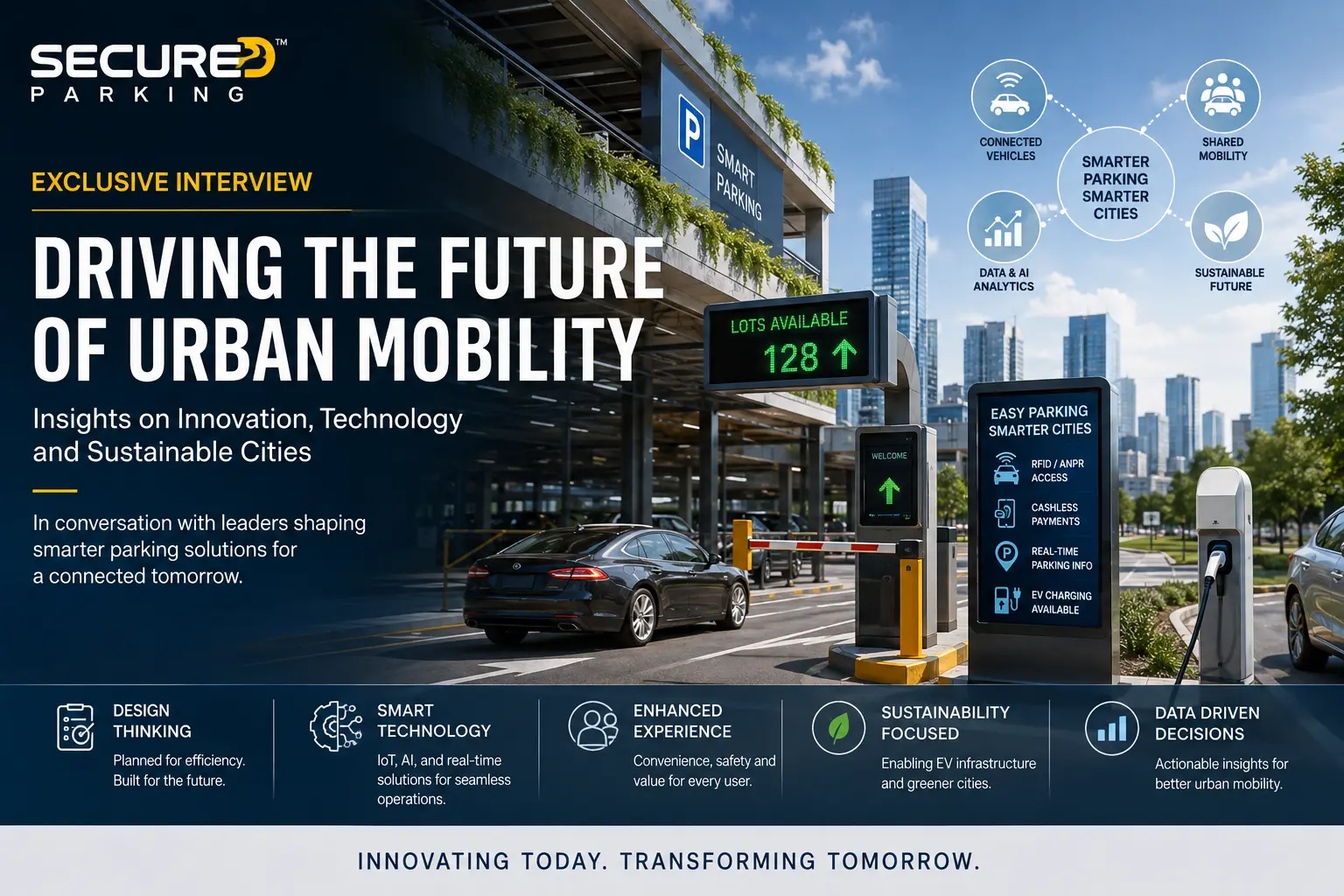
Arvind Mayar: With the emerging trends such as connected vehicles, shared mobility, and autonomous vehicles, role and function of parking needs to be reimagined.
Connected vehicles are internet-enabled cars with smart systems that can communicate with parking platforms to search, reserve, and pay for parking directly from their vehicle dashboards.
Parking operators must now integrate their systems with vehicle platforms and adopt smart payment technologies resulting in more efficient space usage.
With more people using carpooling and ride sharing services instead of owning private vehicles, the need for long duration parking like all-day office or residential parking decreases. Shared mobility reduces overall parking demand, but increases the need for short-term, high-turnover spaces.
Autonomous vehicles are driver-less vehicles that can drop passengers at their destination and then drive themselves to park remotely outside high-density urban areas. They can also return for pick-up as and when required.
This will reduce the demand for urban parking spaces near the place of destination thus freeing up space for other uses.
As autonomous vehicles become more common, there will be a shift towards remote parking depots or drop-off zones, transforming the layout and location of traditional parking infrastructure.
Secure Parking operates in multiple markets. What are the key differences you observe in parking behaviours between developed and emerging economies?
Arvind Mayar: In developed markets, there is a greater emphasis on automation and sustainability with greater focus on digital access and hassle-free parking experience.
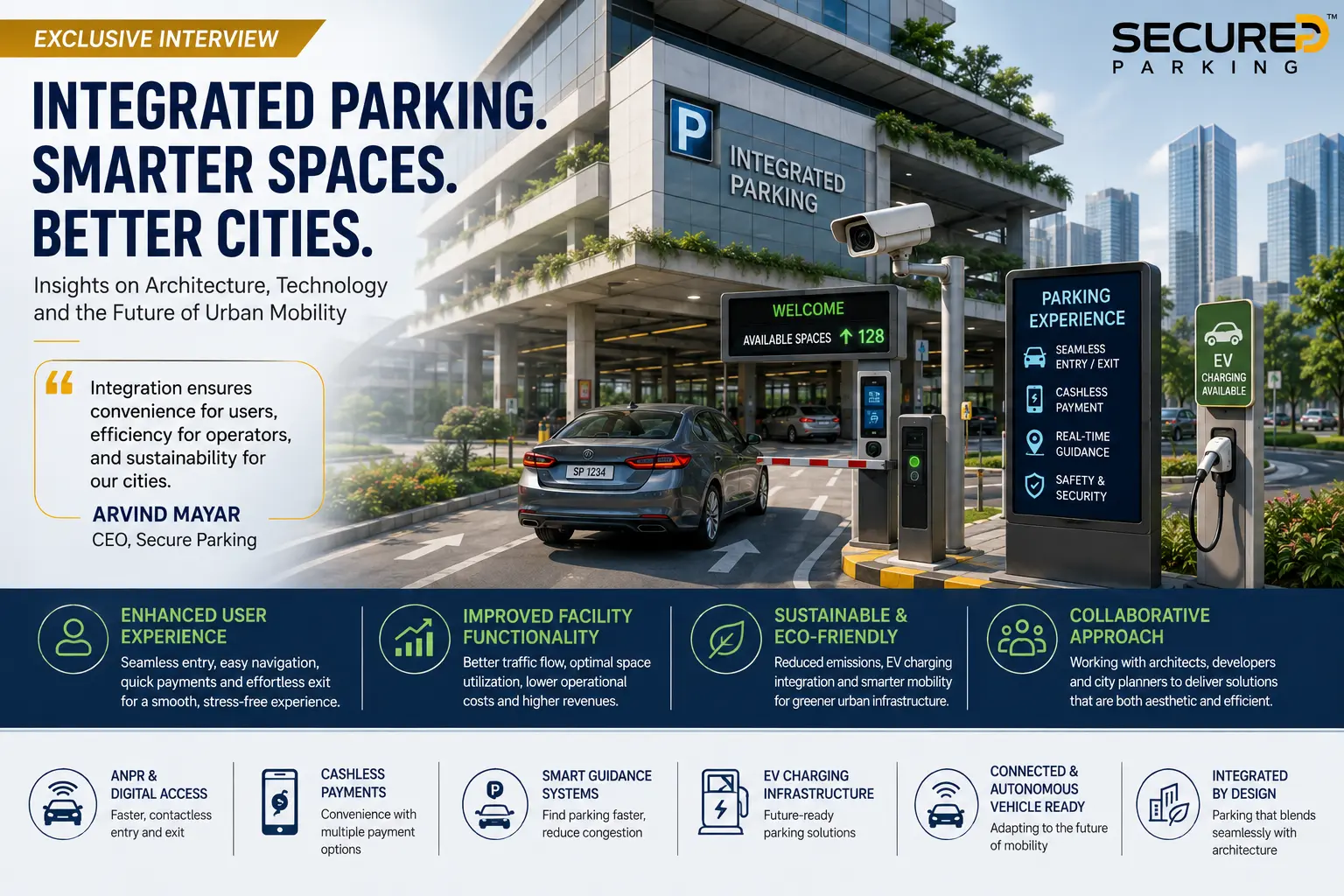
There is a focus on Green Infrastructure, EV Infrastructure, Multimodal Integration, etc; all aimed at reducing environmental impact and promoting more efficient, eco-friendly urban mobility.
The labour cost being lower in developing economies, patrons visiting the car park expect greater human interaction and guidance in the car park.
In emerging economies, cost sensitivity is more important and parking infrastructure varies widely based on land-use.
High cost sensitivity and diverse land-use patterns demand tailored, hybrid parking solutions. Urban areas vary greatly in parking needs, requiring a mix of conventional infrastructure and technology-driven systems to ensure affordability and efficiency.
However, both markets share a growing demand for eventually moving towards technology-driven approach and better integration with urban mass transit systems.
How do you see the future of parking in the context of electric vehicles and the need for EV charging infrastructure?
Arvind Mayar: With growing awareness towards sustainability, there is increasing demand for electric vehicles driving the need for expanded EV charging infrastructure.
Parking facilities are ideally suited to serve as charging hubs, particularly in dense urban areas where home charging is not feasible.
These include a wide range of locations such as shopping malls, office complexes, residential buildings, commercial parking lots, airports, hotels, hospitals, and mass transit stations.
These locations offer the time and accessibility needed for effective vehicle charging. By integrating EV charging into such high traffic destinations, cities can support the growing EV ecosystem.
What have been the biggest challenges you’ve faced leading Secure Parking, and how have you overcome them?
Arvind Mayar: Parking in India is still largely unorganized dealing mostly in cash. Secure Parking has initiated the trend towards corporatization and professionalism by introducing technology and digital payments.
In many car parks 60-70% of the payments are now digital helping parking to integrate into the formal economy
Parking being a conservative industry, adopting new technology requires guiding the transition, updating employee skills, and proving its financial benefits.
We have overcome this challenge by adopting a phased innovation approach, investing in pilot projects, and gathering consistent feedback from our clients and users.
Another challenge in parking design consultancy is that stakeholders either often overlook or underestimate the importance of proper parking design and its impact on overall efficiency.
As Parking Design Consultants, Secure Parking has consistently demonstrated to our clients how thoughtful design can improve operational efficiency and maximize space utilization by adding more parking bays, and reduce both operating and capital costs for our clients.
What leadership lessons can young professionals learn from your journey at the intersection of urban development, technology, and service delivery?
Arvind Mayar: Parking should be viewed not as isolated lots but as critical components of smarter and more livable cities.
Parking Designers need to provide parking solutions that integrate with public transport, reduce congestion, and align with broader urban mobility goals.
Parking industry needs to evolve from a conservative industry to a technology-driven industry and this requires Parking Professionals to constantly adapt to newer technology and ways of implementing it.
Parking professionals must prioritize operational efficiency, user experience, and aligning with stakeholders to ensure that the design and technologies translate into reliable service for users.
Through his leadership, Arvind Mayar continues to drive Secure Parking’s global success, redefining urban mobility with cutting-edge solutions.
His perspectives highlight not just the evolution of parking
management, but also its critical role in building efficient, sustainable cities.
This conversation underscores how innovation and strategic leadership are reshaping the way people experience urban transport systems worldwide.