Parking challenges in India contribute significantly to urban congestion, impacting productivity and revenue. Smart parking solutions, integrating technology like sensors and mobile apps, offer optimized space utilization and improved user experiences. Private operators are leading this transformation, but challenges remain in awareness, technology limitations, and data privacy, as India embraces technology-driven parking at scale.
Driving in India can be enjoyable, but for most commuters, the joy ends when it comes to parking. Circling around crowded streets, waiting endlessly in queues, or facing uncertainty about finding a spot often turns even a short trip into a frustrating ordeal. What seems like a small inconvenience is in fact a major urban challenge with serious economic, social, and environmental costs.
Parking – A Bottleneck Holding Back Urban Growth
According to global studies, nearly 30% of urban traffic congestion is caused by vehicles simply searching for parking. In India, where vehicle ownership is rising steadily—passenger vehicles are expected to cross 50 million by 2030—this creates a multiplier effect: lost productivity, wasted fuel, higher emissions, and declining customer satisfaction for malls, retail hubs, corporate parks, and airports.
For property developers and operators, poor parking infrastructure doesn’t just frustrate visitors—it diminishes footfall, brand image, and revenue potential.
Smart Parking: A Strategic Imperative
combine technology with intelligent planning, integrating sensors, cameras, ANPR (Automatic Number Plate Recognition), and mobile apps to deliver a frictionless experience. Drivers can check real-time availability, reserve spaces in advance, and make cashless payments without stress.
For operators, the benefits go further:
- Optimized Space Utilization – Higher turnover and revenue from existing infrastructure.
- Operational Transparency – Digital records minimize misuse and leakage.
- Dynamic Pricing – Flexible rates based on demand improve both revenue and fairness.
Global Benchmarks and India’s Shift
Worldwide, smart parking has shown remarkable benefits. In Germany, studies suggest that optimized parking management could cut emissions by nearly one million tons annually.
India is beginning to see its own examples:
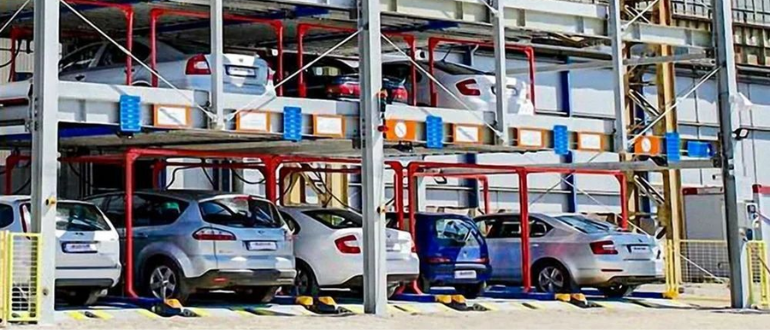
- Nagpur recently inaugurated a multi-level robotic parking facility that eased congestion in a busy market area.
- Delhi, Bengaluru, and Pune are experimenting with app-based parking platforms that integrate with citywide traffic monitoring.
- Tirumala streamlined traffic by making FASTag-based entry mandatory at Alipiri gate, handling 8,000–15,000 vehicles daily without chaos.
Private Operators Leading the Way
Private players like Secure Parking are at the forefront of this transformation. With operations across 40 Indian cities and over 250,000 managed bays, Secure Parking is deploying app agnostic platform for reservations, ANPR-powered entry/exit, real-time monitoring, and contactless payments. Their proprietary DOLPHIN platform also integrates loyalty programs, mobile cashiering, and automated reporting—giving operators deeper insights and customers a seamless experience.
For businesses, this means steady revenues, improved compliance, and happier tenants. For commuters, it translates into peace of mind, faster movement, and a reason to return to malls, offices, and entertainment zones.
Safer Streets, Greener Cities
Smarter parking does more than save time. It reduces roadside chaos, lowers accident risks, and contributes to sustainability. Research indicates that widespread adoption of smart parking could reduce urban emissions by 15–20%, making it a powerful tool in India’s fight against air pollution.
Challenges to Overcome
While the future is bright, challenges remain:
- Awareness & Adoption – Many commuters are unfamiliar with digital-first parking and payments.
- Technology Limitations – ANPR cameras can struggle with non-standard VRN (Vehicle Registration Number) plates, in poor light, inappropriate installation.
- Data Privacy – Strong frameworks are needed to protect sensitive vehicle and user data.
The Road Ahead
Despite these hurdles, the trajectory is clear. Backed by the Smart Cities Mission, India is embracing technology-driven parking at scale. As 750+ million smartphone users drive adoption of app-based mobility services, digital parking will soon become the norm rather than the exception.
Conclusion
Parking may once have been overlooked as a “side issue,” but today it is recognized as a strategic enabler of urban efficiency and business growth. For developers, mall owners, corporate parks, airports, and city authorities, smart parking is not just about convenience—it’s about competitiveness.
Parking is the first and last touchpoint of any urban journey. Make it seamless, and you transform a source of stress into a powerful value proposition.