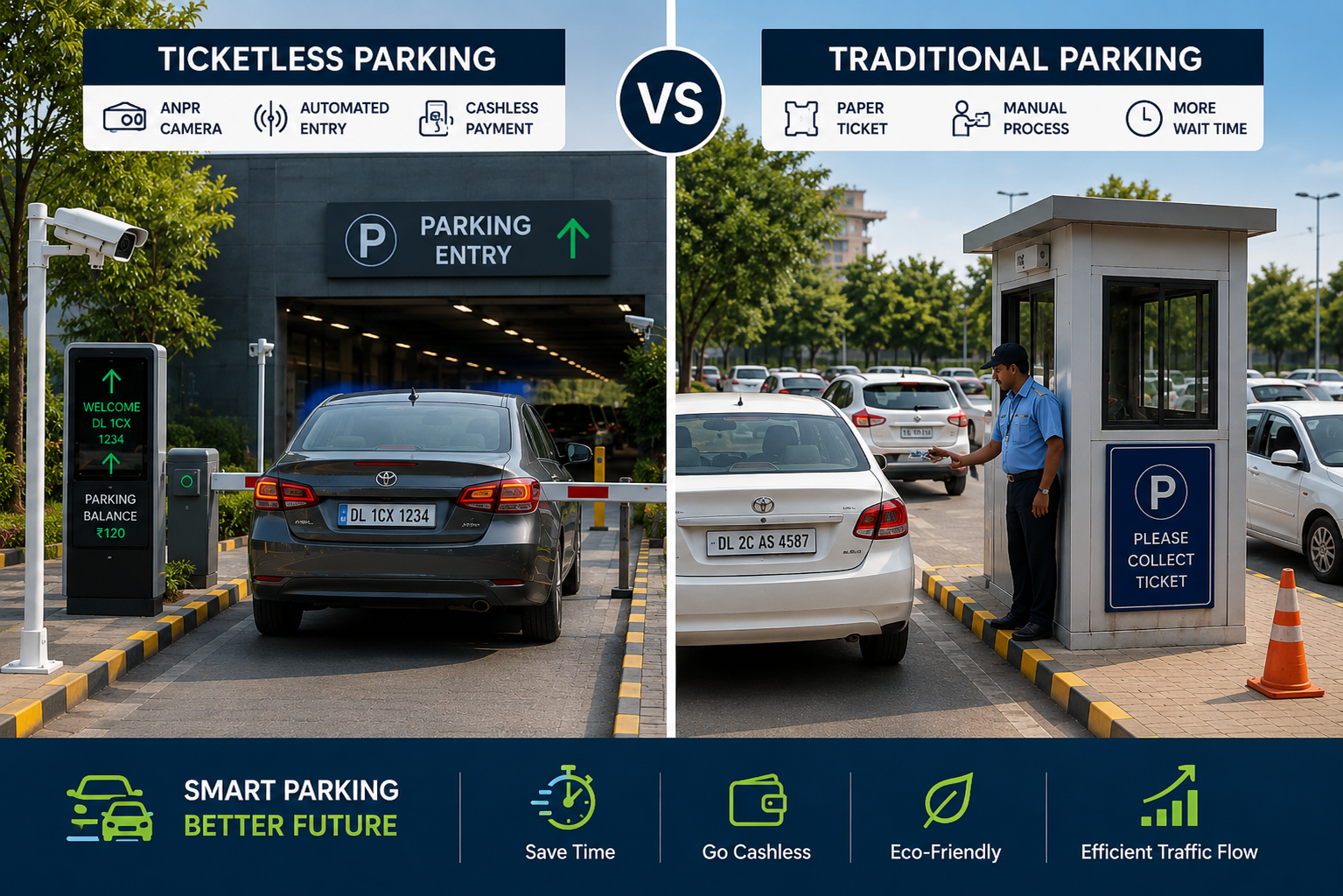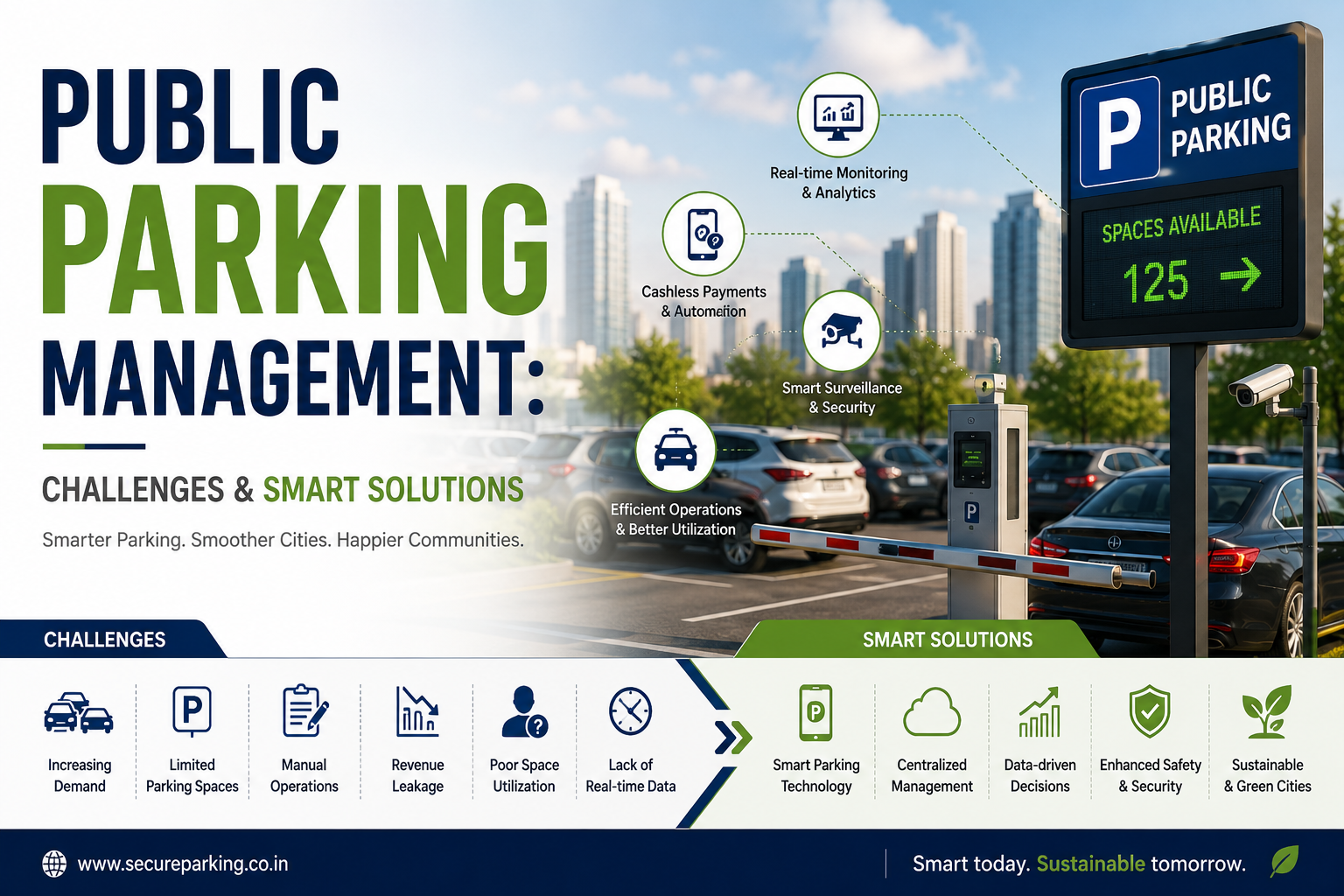
Urban India is expanding rapidly. Cities are growing vertically, vehicle ownership is increasing, and infrastructure is constantly trying to keep pace. Amid this growth, one challenge continues to strain mobility systems — public parking management.
From congested markets and railway stations to government buildings and metro corridors, poorly managed public parking leads to traffic bottlenecks, revenue leakage, safety concerns, and commuter frustration.
In this blog, we explore the key challenges in public parking management and the smart, technology-driven solutions transforming public parking into an efficient, transparent, and revenue-generating system.
Understanding Public Parking Management
Public parking refers to parking facilities operated in open-access areas such as:
- Municipal parking lots
- Railway stations
- Bus terminals
- Metro stations
- Public markets
- Smart City projects
- Tourist destinations
- Urban streets and curbside areas
Unlike private commercial parking (malls or IT parks), public parking requires:
- High transparency
- Revenue accountability
- Crowd control
- Seamless vehicle flow
Managing such large-scale, high-traffic environments requires both operational expertise and advanced technology integration.
Key Challenges in Public Parking Management
Traffic Congestion & Poor Flow Management
Improperly designed entry and exit points create vehicle queues, road blockages, and traffic spillover into public roads.
Peak-hour congestion near metro stations or railway terminals can significantly impact city traffic patterns.
Revenue Leakage & Cash Handling Issues
Manual ticketing systems often result in:
- Ticket duplication
- Cash mismanagement
- Under-reporting
- Unauthorized parking
Revenue leakage remains one of the biggest concerns for municipalities and public authorities.
Lack of Real-Time Monitoring
Without centralized systems, operators struggle to:
- Track occupancy levels
- Monitor staff performance
- Generate live reports
- Detect irregularities
This leads to inefficiency and poor decision-making.
Security & Safety Concerns
Public parking areas are vulnerable to:
- Vehicle theft
- Vandalism
- Unauthorized access
- Disputes over lost tickets
Security lapses directly impact public trust.
Limited Data for Urban Planning
Cities need parking data to:
- Plan infrastructure expansion
- Manage traffic circulation
- Implement Smart City initiatives
- Optimize land utilization
Without digital systems, valuable data is lost.
Smart Solutions Transforming Public Parking
Modern parking management has evolved beyond manual booths and paper tickets. Smart solutions now integrate automation, AI, surveillance, and centralized reporting.
ANPR-Based Ticketless Entry & Exit
Automatic Number Plate Recognition (ANPR) systems:
- Capture vehicle numbers at entry
- Automatically calculate parking duration
- Enable seamless exit
- Reduce ticket fraud
This improves both speed and accountability.
Automated Barrier Gate Systems
Heavy-duty boom barriers:
- Control vehicle access
- Prevent unauthorized entry
- Ensure regulated vehicle movement
Integrated with digital systems, barriers create controlled and secure parking environments.
Digital Payment Integration
UPI, FASTag, QR codes, and mobile wallets reduce:
- Cash handling
- Manual errors
- Revenue leakage
Digital payment also improves commuter convenience.
Centralized Monitoring & Reporting
Advanced parking software provides:
- Real-time occupancy data
- Revenue dashboards
- Transaction logs
- Performance reports
- Audit trails
This ensures transparency for municipal corporations and public authorities.
Parking Guidance Systems (PGS)
LED-based guidance systems:
- Direct drivers to available slots
- Reduce search time
- Lower fuel consumption
- Improve traffic flow
Efficient guidance reduces internal congestion significantly.
Surveillance & Safety Systems
CCTV integration and digital logging improve:
- Vehicle traceability
- Incident resolution
- Dispute management
- Overall safety perception
Benefits of Smart Public Parking Management
When implemented effectively, smart parking systems offer:
Improved Traffic Flow
Reduced congestion around public hubs.
Higher Revenue Collection
Automated billing eliminates leakages.
Enhanced Transparency
Digital logs prevent fraud.
Better Public Experience
Faster entry and exit reduces commuter frustration.
Data-Driven Urban Planning
Occupancy insights help in Smart City decision-making.
Environmental Benefits
Reduced vehicle idling lowers carbon emissions.
FAQs
Public parking management involves planning, operating, and monitoring parking facilities in open-access areas such as municipal lots, metro stations, railway terminals, and public markets to ensure smooth traffic flow and revenue transparency.
Common challenges include traffic congestion, revenue leakage, cash handling risks, lack of real-time monitoring, security concerns, and inefficient space utilization.
Smart parking solutions use technologies like ANPR, automated barrier gates, digital payments, parking guidance systems, and centralized dashboards to improve efficiency, transparency, and traffic flow.
ANPR (Automatic Number Plate Recognition) automatically records vehicle numbers at entry and exit, enabling ticketless parking, faster throughput, accurate billing, and improved security monitoring.
Yes. With proper automation, dynamic pricing, reduced leakages, and digital monitoring, public parking can generate significant revenue for municipalities and urban authorities.
Smart parking systems reduce vehicle search time, improve entry and exit speed, and provide real-time occupancy updates, minimizing internal and surrounding road congestion.
Efficient public parking supports traffic management, reduces emissions, enhances commuter convenience, and provides data-driven insights for better urban planning.